|
|---|




Showing posts with label runners high. Show all posts
Showing posts with label runners high. Show all posts
Tuesday, February 22, 2011
This weekend, this blog had an abnormal spike in traffic for a 7-year-old post called "Understanding the Runner's High", something I had written when reading about early research that linked the runner's high to the endocannabinoid system (rather than the oft-quoted source of endorphins). It turns out that the New York Times ran an article this weekend with some updated findings.

The article is an interesting read. I found the following quote particularly fascinating:
"But perhaps the most telling experiment was published last year by researchers in France who had bred mice with no functioning endocannabinoid receptors. Mice usually love to run, but the genetically modified animals, given free access to running wheels, ran about half as much as usual. Although the full intricacies of the endocannabinoid system’s role in motivating and rewarding exercise is not yet understood, it seems obvious, the researchers say, that the cannabinoid-deprived mice were not getting some necessary internal message. Typically, the endocannabinoid system “is well known to impact onto central reward networks,” the authors write. Without it, exercise seemed to provide less buzz, and the animals didn’t indulge as much."Man, it sucks to be that mouse! But it's intriguing that a fundamental love of running could be genetically built into all of us. I've been feeling rather mouse-like on my treadmill lately and smiling the whole time. ;-)
Tuesday, January 25, 2011
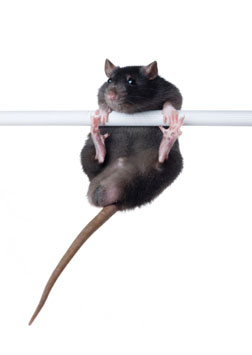
Some highlights:
- Rats who were allowed to exercise before given access to drugs ended up taking less drugs.
- Lewis rats are most inclined to addiction, and also most inclined to habitual exercise, going as much as six miles per day. They can even be trained to do things if the reward is exercise time, rather than food (sounds like our household!).
- A 1967 study showed that when limited a rat's access to food, while simultaneously given them the option to exercise, led to some of them becoming exorexic, and killing themselves with exercise.
- Some scientists refer to the combination of undereating and overtraining in women (composed of disordered nutrition, amenorrhea, and osteoporosis) ironically as FAT - the Female Athlete Triad.
- SD
Friday, April 11, 2008
Runners, along with spectators, will be intoxicated by Marathon (Daily Free Press at Boston University)
0 comments Posted by ai at 1:32 PMClassic - I'm quoted as an expert on "the runner's high"! Well, I certainly do enjoy it.
- SD
Runners, along with spectators, will be intoxicated by Marathon (full story)
By Rachel Leamon
|

Researchers in Germany reported last month in the journal Cerebral Cortex that runner's high can be detected in the brain because running increases endorphins -- neurochemicals shown to reduce pain and create euphoria.
Scott Dunlap, Trail Runner Magazine Trophy Series 2004 Overall Champion, said the exhilaration is unmistakable, usually taking effect on mile eight of his run.
"I would equate it to the feeling of having two Red Bulls and vodka, three ibuprofens and a $50 winning lotto ticket in your pocket," he said.
Dunlap said he enjoys getting his "fix" and though runner's high may motivate people to exercise, he said he does not think it is powerful enough to make him dependent.
"Running can be addictive due to a number of other reasons such as the stimulation from being outdoors and the optimism that comes with being at a high level of fitness," he said.
Virginia Grant, a psychologist at Memorial University of Newfoundland, said in a 2002 New York Times article that rats allowed to run seem unable to stop, and behave like rats addicted to cocaine or morphine.
Boston University track and cross-country runner Molly James said the runner's high only happens when she is alone and running for a long time.
"My whole body relaxes and I feel like I could run forever," James, a College of Communication freshman, said. "It's a head-clearing experience."
People addicted to running can get muscle injuries, causing severe consequences if they continue to run while injured.
"Running becomes problematic either when it produces injuries or is used to avoid dealing with other important matters in life, such as personal relationships," said Boston University's head cross-country coach Bruce Lehane.
Research has shown that exercising regularly can put people in a better mood.
"On average, you tend to see people who are runners and habitual exercisers having better moods, suffering from less depression and less anxiety, and more general feelings of well-being," said American Council on Exercise chief science officer Cedric Bryant.
Friday, March 28, 2008
 Gina Kolata from the New York Times wrote an article about the runner's high, and some recent studies coming out of Germany that have linked it to a rush of endorphins in the brain. See, I knew I wasn't crazy!
Some snippets:
Researchers in Germany, using advances in neuroscience, report in the current issue of the journal Cerebral Cortex that the folk belief is true: Running does elicit a flood of endorphins in the brain. The endorphins are associated with mood changes, and the more endorphins a runner’s body pumps out, the greater the effect.Read the full article here.
The data showed that, indeed, endorphins were produced during running and were attaching themselves to areas of the brain associated with emotions, in particular the limbic and prefrontal areas.The limbic and prefrontal areas, Dr. Boecker said, are activated when people are involved in romantic love affairs or, he said, “when you hear music that gives you a chill of euphoria, like Rachmaninoff’s Piano Concerto No. 3.” The greater the euphoria the runners reported, the more endorphins in their brain.
“Some people have these really extreme experiences with very long or intensive training,” said Dr. Boecker, a casual runner and cyclist, who said he feels completely relaxed and his head is clearer after a run.
SD
(Thanks to JR Atwood for the tip)
Subscribe to:
Posts (Atom)
LinkWithin